
Back to Blog
NBA Opening Night: What Moves Prices in the First Weeks of the Season
October 19, 2026
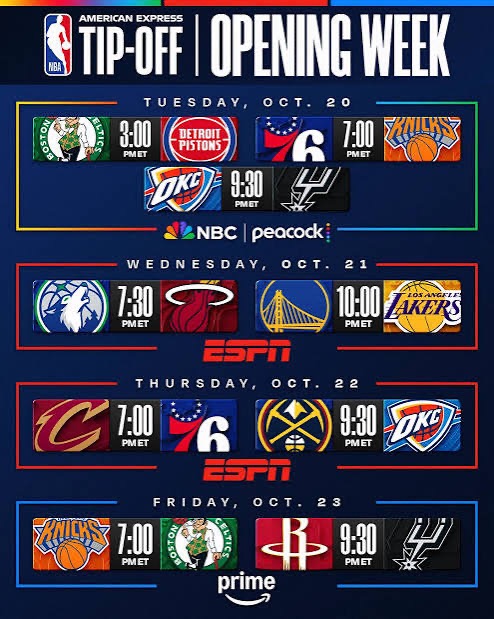
The NBA season starts tomorrow, October 20. The 76ers visit the Knicks, the Celtics visit the Pistons and the Thunder visit the Spurs. We already posted a blog on how odds move during the NFL preseason. This one does the same for the NBA.
The first weeks of a season are a strange time to bet. Teams have changed over the summer, but nobody has seen them play real games yet. Injury reports are full of “questionable” tags. And one player’s status can move a price more than in almost any other sport.
This post covers what is different about early-season NBA prices. If you want the basics of value betting in basketball (markets, props and how to spot a gap between books), start with our Value Betting in Basketball Guide.
What Do the Injury Labels Mean?
Before most games, each team lists injured players with one of four labels.
- Out. The player will not play.
- Doubtful. The player probably will not play. Roughly a 1 in 4 chance they do.
- Questionable. It could go either way. Close to a coin flip.
- Probable. The player is expected to play.
On game day the NBA updates its public report every 15 minutes. That rule has been in place since December 2025. So a “questionable” tag can turn into a clear yes or no at almost any point in the afternoon. Most of these decisions land in the last two hours before tip-off.
A questionable tag is uncertainty, and the price reflects it. When the tag becomes “in” or “out,” the guess becomes an answer and the price moves.
Why Does One Player Matter So Much?
Only five players per team are on the court at once. In football there are 11.
A team’s best player can score a quarter to a third of its points in a game. When that player sits, the four other starters and the bench have to cover a large part of the offense. In a sport with more players on the field, the same absence is spread across more people. It moves the price less.
That is why a single status change can move an NBA price by several points of implied probability.
Why Are the First Weeks Different?
Early-season prices are built on less information than at any other time of year.
- Last season still drives the numbers. Books start from last year’s results and the summer’s roster moves. They have nothing newer to go on yet.
- New rosters are unknown. A team with new starters has not played real games together. Nobody knows how well it fits until it does.
- Preseason says little. Stars often play limited minutes or sit out. Preseason results are a weak guide to the regular season.
- Teams are careful with players. Anyone coming back from injury is more likely to get a questionable tag or a minutes limit. That means more late decisions.
All of this adds up to more uncertainty than usual. And when there is more uncertainty, news moves prices further.
How Do Prices Settle as the Season Goes On?
Every game adds information. After a few weeks the market has real results for every team. It knows which new rosters work and which do not. It knows who is healthy.
As that happens, prices get tighter. Moves on injury news are still there, but they are usually smaller, because the market is less surprised by what each team looks like without one player.
So the first weeks have two sides. Prices are less reliable, which creates chances. But you are also working with less information than later in the season, just like the books are.
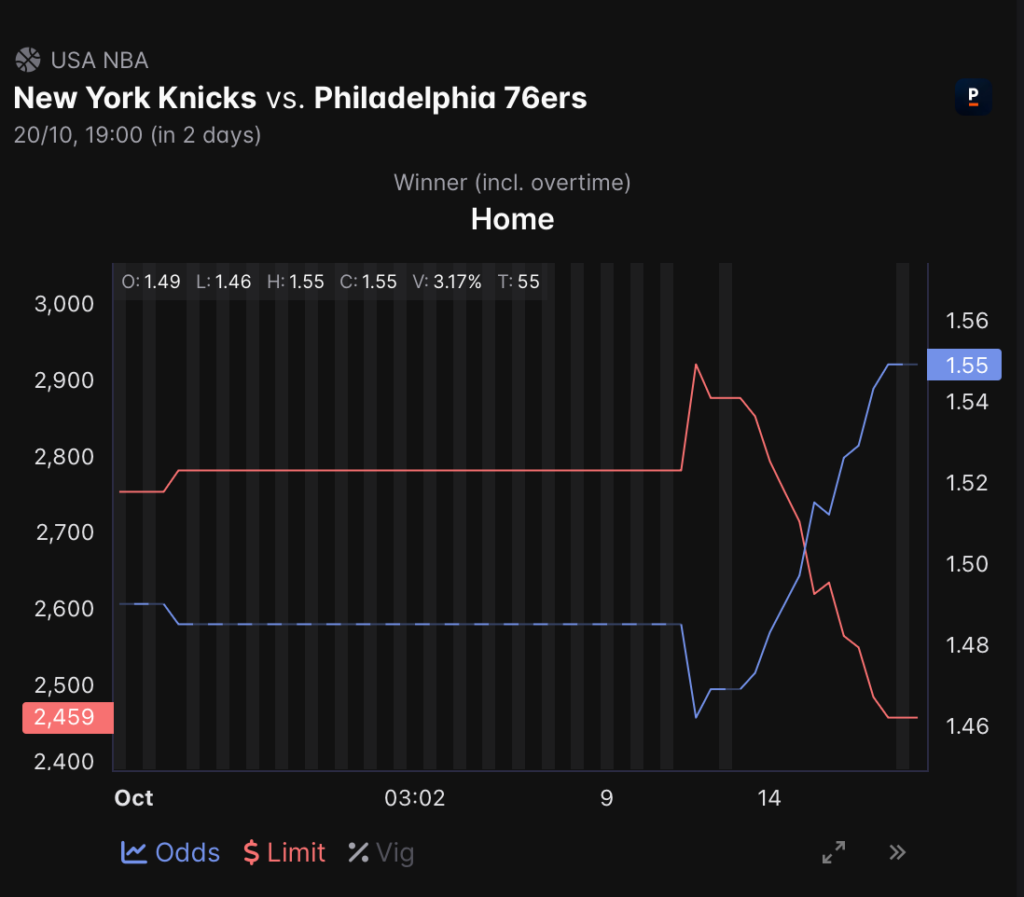
You can already see this happening before a single game is played. Pinnacle opened the Knicks at 1.49 for their opening-night game against the 76ers. The price barely moved for about ten days. Then, in the last week, it drifted slowly out to 1.55.
That is a small move. The Knicks’ implied chance went from about 67% to about 64.5%. But it shows how early prices work. There was no single big jump and no headline. The market adjusted a little at a time as preseason news came in. Once real games start, that process speeds up.
What to Watch During Opening Week
- Players returning from injury. Expect questionable tags and late calls.
- Minutes limits. A player can be “in” but only play part of the game. That matters for totals and props.
- New lineups. Teams that changed a lot over the summer are the hardest to price. Watch how their lines move in the first few games.
- Overreactions to one game. One big win or loss in week one tells you little. Sharp prices usually move less than the public expects.
Seeing the Move on BetUnfair
You do not need to refresh the injury report all afternoon. When a status changes, a sharp book like Pinnacle reacts within seconds. BetUnfair’s Dropping Odds Alerts tell you when that happens, and Graph Center shows how the price moved through the day.
Start your free 5-day trial at betunfair.io and be ready for the first status change of the season.
FAQ
When Does the 2026-27 NBA Season Start?
On Tuesday, October 20, 2026. The opening night games include 76ers at Knicks and Thunder at Spurs.
What Does “Questionable” Mean on an NBA Injury Report?
The player could play or sit. It is close to a coin flip. The final decision often comes in the last two hours before tip-off.
How Often Does the NBA Update Its Injury Report?
Every 15 minutes on game day, since December 2025. Before that it was once an hour.
Why Do Basketball Prices React So Strongly to One Player?
Only five players per team are on the court. One star sitting out removes a larger share of the team’s scoring than a similar absence would in a sport with more players.
Are Early-Season NBA Prices Less Reliable?
They are built on less information. Books lean on last season and summer roster moves until enough games have been played. That is why news in the first weeks can move prices more.
Keywords: NBA betting · NBA opening night · NBA season 2026-27 · NBA injury report · questionable tag · early season NBA odds · basketball line movement · minutes restriction · dropping odds · sharp bookmakers