
Back to Blog
What Happens When Pinnacle Closes a Market?
November 6, 2026
Pinnacle’s closing price is the best estimate we have of the true chance of an outcome, and beating it is the clearest evidence of skill a bettor can show.
Sometimes Pinnacle does not just lower its limit. It takes the market down completely, and for a short time there is no Pinnacle price at all. Many bettors treat that as a signal, if the sharpest book in the world stops taking bets, surely something happened.
This article asks whether the evidence supports that.
Why Would Pinnacle Close a Market?
A bookmaker closes a market when it does not want to take any bets at its current price. There are three common reasons:
- News. A team sheet, an injury or a late withdrawal changes the true probability, and the old price is now wrong.
- Money. A large bet, or a run of bets from accounts Pinnacle respects, arrives faster than it wants to move the price step by step.
- Checks. The market is pulled for a short time while something is confirmed and comes back at the same price.
In play, markets close after every goal or red card. Most of those are routine. This article looks mainly at pre-match closures, with one in-play example where the reopening tells its own story.
How to See a Closure
Most odds data hides closures. Opening and closing odds, like the files on this site, only show where a price started and where it ended. They say nothing about what happened in between. To see a closure you need the price and the limit recorded through the day.
The charts below come from BetUnfair.io, a sharp odds monitoring tool. Its Closed Market alerts flag the moment Pinnacle’s limit on a market falls to zero, and when the market returns. We explain how the alert works in more detail in Closed Markets Explained.
The full chart in Graph Center (Figure 1) plots the price in blue and Pinnacle’s limit in red, with each closure shaded as a band. The Closed Market view opens from the alert and shows a smaller chart above a price log, where a closure is a row with no price and no limit, marked X.
Hull City vs Derby County: the Price Comes Back Lower
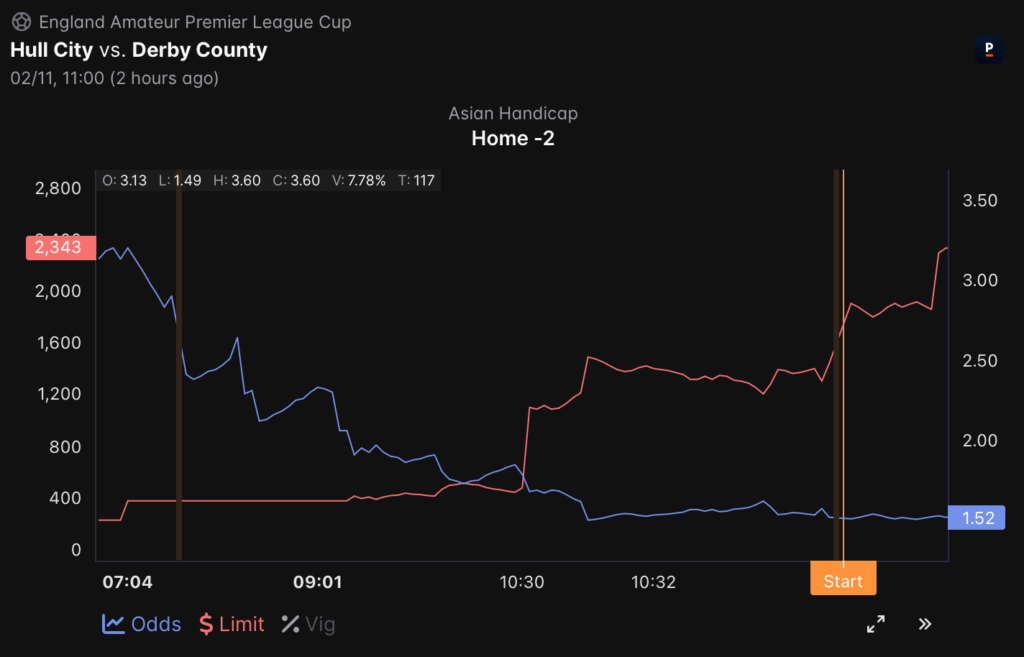
Figure 1: Hull City vs Derby County (England, Premier League Cup), Asian Handicap, Hull -2.
The shaded band near the left of the chart marks a closure about four hours before kick-off. Before it, the price was already falling, from 3.13 to about 2.85. When the market came back, the price was about 2.65. The blue line drops straight through the band.
This was not a check. A check comes back at the same price. Here Pinnacle stopped taking bets while the price was moving and reopened at a new number.
The red line tells the rest. The limit sat around 400 before the closure and stayed there after it. That is the kind of fragile, early price the earlier article described. The move was real, but Pinnacle was not yet ready to back it with much money. Only later in the day, closer to kick-off, did the limit start to rise.
Preston vs Fleetwood: the Limit Comes Back Lower
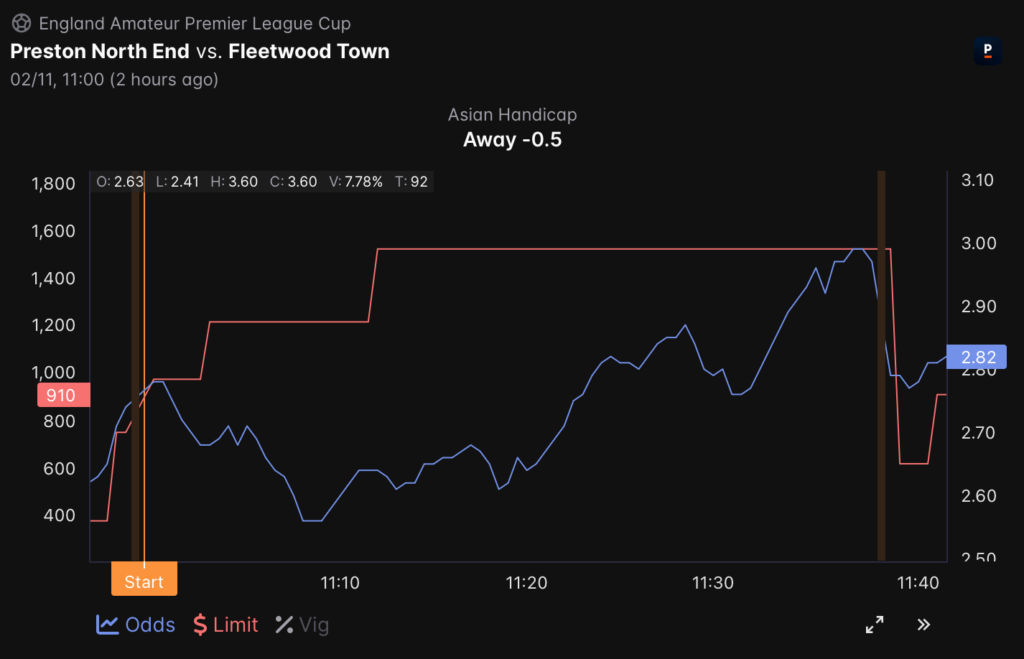
Figure 2: Preston North End vs Fleetwood Town (England, Premier League Cup), Asian Handicap, Fleetwood -0.5.
This closure came in play, about 38 minutes into the match. Before it, the limit was 1,527. When the market came back, the price had moved from about 2.95 to about 2.75, but the bigger change was in the red line. The limit returned at about 620, less than half of what it had been.
Over the next six minutes Pinnacle rebuilt it in steps: to about 900, then about 1,200, then back to 1,527. Pinnacle came back unsure. It cut what it was willing to take and raised it again only as its confidence returned. Here the reopened limit said more than the reopened price. We look at what a rising or falling limit can tell you in our blog: Low Limits, Loud Odds
Pacers vs Hawks: Two Closures, Two Stories
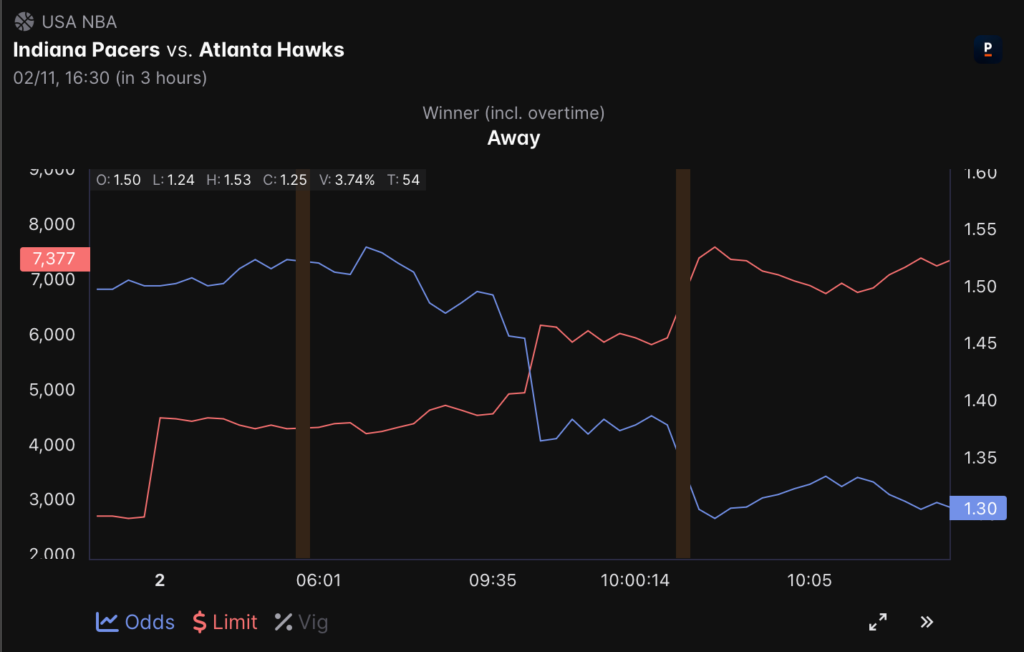
Figure 3: Indiana Pacers vs Atlanta Hawks (NBA), Winner, Atlanta Hawks.
This chart shows two closures on the same market, and they ended in opposite ways.
The first came about ten and a half hours before tip-off. The price was about 1.51 before it and about 1.51 after it. The limit stayed at about 4,300. Nothing changed. It looks like a check.
The second came about six and a half hours before tip-off. Before it, the price was already falling, from 1.50 to about 1.37, and the limit was rising from about 4,500 to about 6,100. Money was arriving. Pinnacle closed the market, and it came back at about 1.31 with the limit raised to about 7,400. From there the price kept falling to 1.25 and the limit kept rising to 9,183.
So was the closure a signal? Not in the way most bettors would read it.
A bettor who saw the first closure and rushed to a soft book would have been betting on a move that never happened. A bettor who watched the second one would have seen the move coming before the market closed. The closure itself added nothing. The price and the limit around it did.
Is It the Closure, or Just the News?
Here is the obvious objection. If a closure is caused by news, such as a team sheet, the closure tells a bettor nothing that reading the news would not.
The closures here came at very different times: four hours before kick-off, in the middle of a match, and twice on the morning of a basketball game. Some were probably news and some probably checks. Four closures cannot tell those apart.
What the examples do show is that a closure, on its own, carried no information about direction. The information came when the market reopened: in the price, in the limit, or in both. A closure is one of three signals Three Signals that a sharp book has changed its mind. Price drops and limit changes, the other two, are the ones that carry direction.
Following Closures in Practice
Closures are easy to miss. Most last seconds or minutes and nothing in the opening or closing odds shows they happened. BetUnfair’s Closed Market alerts send a notification the moment Pinnacle’s limit falls to zero, and a second one when the market reopens, with the new limit. Alerts can be filtered by bookmaker, sport, market, period and time before kick-off, so a bettor can follow only pre-match closures and ignore the in-play noise.
Each alert opens the market in Graph Center, where the price, the limit and every closure sit on the same chart. Alongside Pinnacle, BetUnfair follows 16 other sharp books, so bettors can check whether a closure at Pinnacle was matched anywhere else.
What This Means for Value Bettors
- Do not treat a closure as a signal on its own. In these examples it was followed by a new price, a lower limit, a higher limit, or nothing at all.
- Watch what the market does after it reopens. The reopened price, and any move that follows, is where the information is.
- Look at the limit when the market returns. A lower limit suggests Pinnacle is still unsure. A higher limit suggests it is confident in the new price.
- Check whether the whole match closed or a single market. A closure across every market at once looks more like a check than a reaction to money.
- If you track your bets, mark the ones placed during or shortly after a closure, and check their closing line value separately.
Try it yourself: set up a Closed Market alert for the leagues you bet and watch what the price does when the next market reopens. Every plan comes with a 1-month money-back guarantee.
Explore Closed Market alerts at betunfair.io
Keywords: Pinnacle closed market · Pinnacle market closure meaning · Pinnacle limits · closing line value · best dropping odds tool · Pinnacle Odds Dropper alternative · dropping odds alerts · sharp odds movement tracker · Pinnacle odds monitoring · value betting alert software